
Geotechnical Engineering

Instrumentation & Monitoring

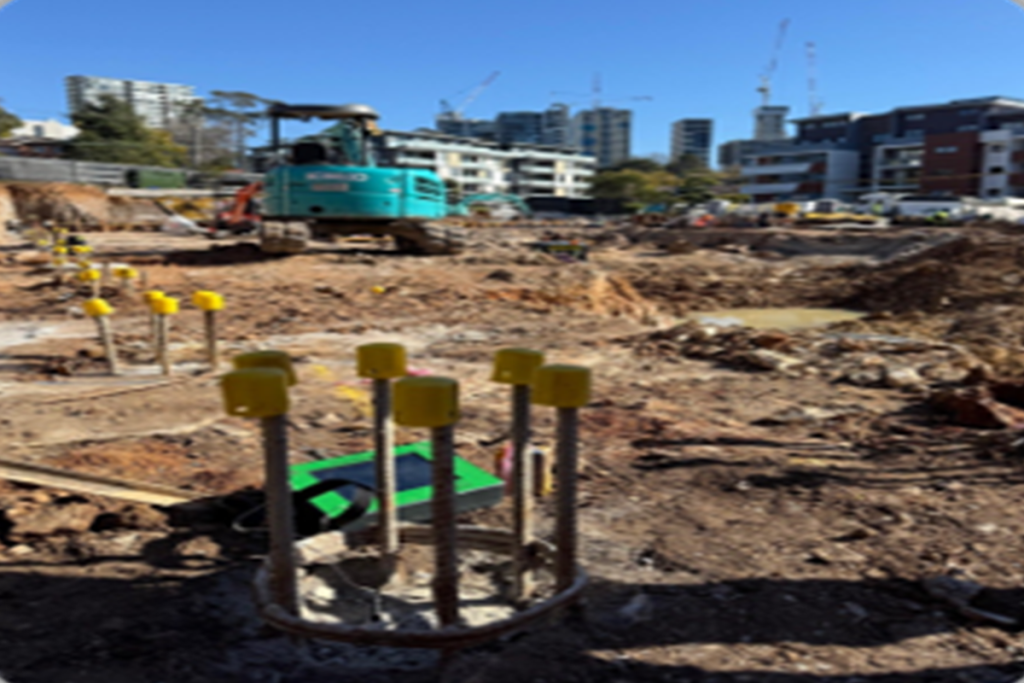
KFM Geotech provides instrumentation installation and monitoring services to public- and private-sector clients across NSW. We specialise in assessing and mitigating risks associated with ground movement and infrastructure stability.
Scope of Work

Key Services
Included

The Service

What is Our Approach For
Instrumentation & Monitoring?

Our team designs, installs, and maintains sensor networks (inclinometers, piezometers, settlement gauges, and automated data acquisition platforms) tailored to each project. Real-time data acquisition gives our clients actionable insight into ground behaviour across embankments, slopes, dams, levees, and construction sites.
Why It Matters

Four Reasons to Monitor

See Movement Before Damage

Instruments pick up millimetre-scale movement long before it is visible in a wall or a road surface.

Satisfy Consent Conditions

Councils, TfNSW, Sydney Water and neighbouring asset owners commonly set vibration and movement limits that have to be demonstrated, not assumed.

Protect Neighbouring Assets

Documented monitoring records what the works actually did to the surrounding ground, which matters if a damage claim is later made.

Act on Data, Not Guesswork

Trends in the readings show whether movement is stabilising or accelerating, so the project team can respond while there are still options.
How It Works

From Inquiry to Report Delivery

A clear process designed to help clients move from first contact to technical recommendations with confidence.
01
1 business day

Initial Enquiry

Submit the contact form or call KFM with your project details. KFM responds within 1 business day to acknowledge your enquiry and clarify the scope.

01
02
2–3 business days

Scope & Proposal

KFM reviews the project documentation, site address, and requirements, then issues a fee proposal and scope of works within 2–3 business days.

02
03
On-site work

Site Investigation

Field works are mobilised, including drilling, sampling, and in-situ testing, supervised by a senior engineer or geologist.

03
04
3–5 business days

Laboratory Testing

Collected samples are tested in accordance with relevant Australian Standards

04
05
2–3 business days

Analysis & Reporting

Data is analysed, engineering recommendations are prepared, and a draft report is issued for client review.

05
06
Inspections & certification

Construction Support

Where required, KFM provides on-site inspections, certificates, and real-time geotechnical advice during excavation, filling, or piling.

06
Compliance

Designed Around Technical Standards

KFM’s work is informed by relevant Australian Standards, council requirements, and project-specific engineering guidelines where applicable.

AS 1726

Geotechnical Site Investigations

AS 2870

Residential Slabs & Footings

AS 4678

Earth-Retaining Structures

TfNSW

Transport for NSW Guidelines

Council

Local Council Requirements

Project Case Study

A Recent
Project Example

Monitoring & Instrumentation
📍 Merrylands, NSW
22-Storey Building — Merrylands, NSW
Challenge
A 22-storey building over a deep basement required ground and groundwater behaviour to be tracked through construction, with neighbouring properties sensitive to both vibration and groundwater drawdown.
Solution
KFM Geotech installed and monitored groundwater standpipes and inclinometers, ran vibration monitoring through piling and excavation, carried out permeability testing and hydrogeological assessment, and prepared the dewatering management plan.
Outcome
Wall movement, groundwater levels and vibration were tracked against agreed limits throughout the works, so changes in ground behaviour showed up in the data rather than in damage.

50+

Years Combined Experience

1000+

Projects Delivered

NSW Wide

Coverage

AS 1726

Standards Aligned

FAQ

Frequently Asked
Questions

Can’t find the answer? Call our engineering team directly.

What can KFM monitor?

Ground and structure movement using inclinometers, groundwater levels and pressures using piezometers and data loggers, ground vibration using vibration loggers, and pile condition using pile integrity testing. Sensor networks are designed around the specific risks on your site rather than a standard package.

Commonly where piling, rock breaking, excavation or compaction takes place near neighbouring buildings, heritage structures or buried services — and wherever a council condition, a dilapidation report or an asset owner requires vibration to be kept below a stated limit.

An inclinometer is a grooved casing installed in the ground or cast into a shoring wall. A probe or in-place sensor measures how that casing deflects with depth over time, which shows where movement is occurring, how large it is, and whether it is stabilising or accelerating.

Yes. KFM installs data loggers and automated acquisition so readings are captured continuously rather than only when someone is on site. This matters where limits are tight, where works run outside business hours, or where access to the instrument is difficult.

Pile integrity testing is a low-strain, non-destructive test on cast in-situ piles. It checks for defects such as necking, voids and discontinuities and gives an indication of pile length. It is quick to run and is usually applied across a sample of the piles on a site.

Readings are compared against the alert, action and alarm levels agreed for the project and reported so the team can see the trend, not just a single number. If a level is approached or exceeded, KFM raises it with the project team rather than waiting for the next scheduled report.

Start Your Enquiry

Need Geotechnical Advice For Your Project?

Talk to our engineering team about your project requirements. We’ll clarify the scope, advise on investigation methodology, and provide a fixed-fee proposal.